The first time I saw my grandfather’s hands shake, he tried to hide it by pretending he was tapping along to the radio.
We were in his kitchen—the same kitchen that would later become a battlefield, a crime scene, and, somehow, the place that saved me.
He stood over a pot of beans, humming along to an old soul station, wrist flicking like he was keeping time. But the spoon rattled against the pot. The sound was wrong. Grandpa Mateo “Pops” Alvarez never rattled. He was the kind of man who could slice tomatoes paper-thin and still leave the cutting board clean. If you spilled, he’d slide a dish towel across the counter in one smooth motion, like he’d been born with an extra sense for mess.
That day, I watched him fight his own fingers.
“You’re over-stirring,” I teased, because teasing was easier than fear.
He smiled without turning around. “Beans like attention.”
“Beans don’t need attention,” I said. “They need salt.”
He finally looked at me then. His eyes were bright, but tired around the edges. “Everything needs attention,” he said. “If you ignore it long enough, it starts taking from you.”
At the time, I thought he meant my job, my dating life, the way I kept my phone face-down like it might bite. I didn’t realize he meant people.
Or family.
Or the way a house can feel safe right up until someone decides it’s theirs.
A year later, he was dead. And his $5 million estate turned my blood relatives into strangers with my last name.
They called it grief. They called it rights. They called it what they needed to call it so they could sleep.
I didn’t sleep at all.
It started at the funeral—because that’s where it always starts when families crack. Not at the reading of the will. Not in the courtroom. Not even in the betrayal. It starts when someone looks at a coffin and sees a locked box.
Pops wanted a small service. “No fuss,” he told me. “No acting. I’m dead, I won’t be there to complain.”
But my mother, Lidia, did fuss anyway. She fussed like she was building a stage.
She wore black lace and a face so dramatic you’d think she was auditioning for a part called Devastated Daughter. She cried loudly enough for the back row. She clutched my arm with long nails and whispered, “Stand up straight. People are watching.”
People always were, in my mother’s world.
My uncle Rafe—my mother’s older brother—stood near the casket like a guard, his heavy hand resting on the wood whenever someone walked too close. He looked less sad than possessive, like Pops’ body was a vehicle that came with paperwork.
My aunt Maribel hovered near the flower arrangements, plucking out the nicest roses and re-tucking them so the spray looked expensive. Her eyes stayed dry. Her jaw worked constantly as if she were chewing a problem.
Then there was my cousin Nico, Rafe’s son, who smelled like cologne and entitlement. He whispered into his phone the entire time, glancing around like he was waiting for a camera crew to show up and film his pain.
I stood beside the closed casket with my hands folded and my mouth shut. I didn’t cry until the pastor started talking about Pops’ generosity, because that word hit me harder than death.
Generous.
That’s how everyone described him. Like kindness was a loose change he tossed around. They didn’t see what it cost him. The nights I brought him soup after chemo. The mornings I drove him to dialysis. The way he pretended he didn’t need help until his pride ran out.
My family didn’t do that part.
They did holidays. They did Facebook posts. They did calls on birthdays and silence the rest of the year.
Two months before Pops died, my mother decided she was “back in the picture.” Not because she suddenly remembered love, but because Pops’ illness had become public enough that people started asking questions at church.
“How’s your father?” they’d say.
And my mother would smile that thin smile. “Oh, you know, we’re managing.”
We.
As if she’d been in his kitchen at all.
At the graveside, as the coffin sank into the earth, my mother leaned toward me and whispered, “After this, we need to talk about the house.”
I stared at her. “What house?”
She blinked, then laughed softly like I was being silly. “Dad’s house. His assets. We need to make sure everything is handled properly.”
Pops wasn’t even in the ground yet.
I felt my throat tighten, my tongue go heavy with words I didn’t want to say in a cemetery. “He has an attorney,” I muttered. “He handled it.”
My mother’s nails pressed into my elbow, a warning. “Don’t be naive, Sofía. You lived with him, you know how forgetful he got. People take advantage.”
People.
She said it like she wasn’t people.
I pulled my arm away. My aunt Maribel saw it and immediately stepped closer, voice sweet as poison. “Honey, don’t be defensive. We’re just trying to keep things fair.”
Fair.
That word is always the first lie.
After the burial, the family gathered at Pops’ house for what my mother called “a proper reception.” Pops would have hated it. He’d have hated the way they moved through his rooms, opening drawers like they were browsing a store, lifting framed photos to check behind them as if cash might be taped there.
I watched Nico wander into Pops’ office and whistle. “This place is bigger than I remember,” he said. “Bet it’s worth a fortune now.”
“It’s not for sale,” I snapped, instantly.
Nico smirked. “Relax. You’re not the boss.”
“My dad’s not even cold and you’re—” I began, but my mother cut me off with a sharp look.
“Don’t start,” she hissed. “Not today.”
As if I was the problem.
In the kitchen, my uncle Rafe opened the fridge and frowned. “He never kept it stocked,” he said loudly. “Always living like a bachelor.”
I stared at him. “He was a bachelor,” I said. “He was widowed. And he cooked every day.”
Rafe shrugged like facts were opinions. He turned to my mother. “We should change the locks. Just until things are settled.”
My pulse jumped. “Change the locks?”
Maribel sipped her wine—Pops’ wine, from Pops’ cellar—and said, “It’s standard. You never know who has keys.”
I knew who had keys.
All of them.
Pops had given them spares years ago, back when he still believed family meant protection.
He’d told me once, quietly, “I gave them keys so they could check on me.”
Then he’d laughed without humor. “They checked on the house more than they checked on me.”
That night, after they left, I walked through Pops’ house turning off lights they’d left blazing, picking up napkins and half-eaten sandwiches, wiping wine rings off his table. Grief sat in my chest like wet cement.
In Pops’ bedroom, I opened his nightstand drawer to put away a stray bill. My fingers brushed something paper-thin tucked behind his Bible.
A note.
In Pops’ handwriting—bold, slanted, angry in a way his voice rarely got.
SOFÍA — IF THEY START FIGHTING, DON’T FIGHT BACK. LET THEM TALK. THEY ALWAYS TELL ON THEMSELVES.
My hands shook.
He’d known.
I pressed the note to my chest like it could restart his heart.
Then I did the one thing I swore I wouldn’t do the week he died: I called his attorney.
Her name was Judith Kaplan, and Pops adored her because she didn’t let him charm his way out of hard decisions. “That woman scares me,” he used to say, beaming, “and that’s why I trust her.”
Judith met me in her office two days later. She wore a navy suit and the face of someone who didn’t tolerate nonsense, not even grief-flavored nonsense.
“I’m sorry about Mateo,” she said, softening just slightly. “He spoke about you often.”
I swallowed. “He spoke about… what he wanted?”
Judith nodded. “He was very clear.”
My mother arrived ten minutes late, sweeping into the office like she owned it. Rafe and Maribel followed, along with Nico, who looked bored until he saw the leather chairs.
Judith didn’t invite them to sit. She simply opened a folder and began.
“Mateo Alvarez’s estate includes this residence, valued at approximately $1.8 million; two rental properties, valued at approximately $1.6 million combined; various investments totaling approximately $2 million; and liquid accounts—”
My aunt Maribel made a pleased sound in her throat.
Judith continued, unblinking. “Mateo’s last will and testament, executed eighteen months ago, leaves the majority of his estate in trust for Sofía Alvarez.”
The air changed.
My mother’s smile froze. Rafe sat forward. Nico’s eyes lit up like slot machines.
“What?” my mother said, too loud.
Judith held up a hand. “There are specific bequests to each of you.”
Rafe exhaled sharply. “How much?”
Judith looked at him like he was an insect on her window. “Mateo left $50,000 each to Lidia, Rafael, and Maribel.”
My mother made a choking sound. “Fifty thousand? That’s—”
“That’s insulting,” Maribel snapped, dropping the sweetness completely.
Judith didn’t flinch. “He also left $25,000 to Nicolas Alvarez.”
Nico blinked. “That’s it?”
Judith turned the page. “The remainder goes to Sofía, with a condition: the home may not be sold for five years unless Sofía chooses to. Mateo specified he wanted her to have stability.”
My mother’s face flushed. “This is wrong.”
Judith’s eyes narrowed. “It is not wrong. It is signed, witnessed, notarized. Mateo was competent. He planned carefully.”
Rafe slammed his palm on the desk. “She manipulated him.”
My stomach dropped. “Excuse me?”
Maribel pointed at me like I was a criminal. “You lived with him. You had access. You poisoned him against us.”
I laughed once, sharp and ugly. “You weren’t there. You didn’t come. You didn’t call.”
“We were busy!” my mother cried. “We have lives!”
“And Pops didn’t?” I shot back. “He had chemo. He had dialysis. He had nights he couldn’t stand up without me.”
Rafe stood so fast his chair scraped. “You’re not taking my father’s estate.”
Judith’s voice cut through like a blade. “Sit down, Mr. Alvarez.”
Rafe hesitated—then sat, jaw clenched.
My mother’s eyes were glossy with fury. “This can’t stand,” she said, voice trembling. “There has to be another will.”
Judith was quiet for one breath too long.
Then she said, “If you believe there is a more recent will, you may present it.”
My uncle Rafe’s mouth twitched.
It was barely anything. A flicker. But I saw it.
My heart sank.
Because my uncle wasn’t surprised by the idea of another will.
He was relieved.
Nico leaned back, smug. “Funny you should say that,” he murmured.
Judith’s gaze snapped to him. “Do you have a document?”
Nico glanced at his father, then at my mother. Like he needed permission to pull a pin.
Rafe said, “We do.”
My skin went cold.
Rafe pulled a folder from his briefcase—because of course he’d brought a briefcase to the reading of a will. He slid a stack of papers across Judith’s desk with the reverence of a priest laying down scripture.
“This is Dad’s final will,” Rafe said. “Signed two weeks before he died.”
Judith took the papers slowly, scanning.
Her face didn’t change.
But her eyes sharpened.
“This is…” she began, then stopped. She flipped to the signature page. “This signature—”
“That’s his,” my mother said quickly. “That’s our father.”
Judith looked up at me. “Sofía, did Mateo tell you he changed his will?”
My throat tightened. “No,” I said. “He told me everything was set.”
Maribel snapped, “Of course he wouldn’t tell you. You would’ve stopped him.”
I stood up, trembling. “He was afraid of you,” I said, and the truth tasted like blood. “He told me he was afraid you’d take his house.”
My mother slapped the arm of her chair. “Liar.”
Judith raised her hand. “Enough. I will review this document. If it is valid, it supersedes the prior will. If there is evidence of coercion or incompetence, it will be contested.”
Rafe’s mouth curled. “Contest it. You’ll lose.”
I stared at the signature.
It looked like Pops’ name.
But it looked… too smooth.
My grandfather’s last months were full of tremors. He couldn’t even hold a spoon without rattling the pot.
And yet this signature flowed like a man with steady hands and no fear.
My mother leaned closer, voice low and poisonous. “You should’ve been a better daughter, Sofía. Maybe then he would’ve remembered you weren’t the only one.”
I felt something inside me go quiet.
Not calm.
Not peace.
Just the moment before a storm decides which direction it will destroy.
Judith’s eyes met mine. “If you wish to contest this,” she said gently, “we will need time.”
Rafe stood again. “We’ll see you in court.”
And just like that, grief became war.
They didn’t wait. They didn’t give me a week to breathe. The next morning, I woke up to missed calls from my realtor friend and a text from a neighbor I barely knew:
Your family is at the house with movers.
I almost dropped my phone.
I drove to Pops’ house with my hands shaking on the wheel, heart pounding so hard it made me nauseous. When I pulled into the driveway, I saw Nico’s SUV and a rented moving truck parked crookedly like it didn’t care where it landed.
My mother stood on the porch barking orders like a general.
“Careful with that lamp,” she snapped. “That one’s valuable.”
That lamp had been my grandmother’s. Pops kept it because it smelled like her. My mother didn’t care about smell. She cared about resale.
I ran up the steps. “What are you doing?”
My mother turned, eyes cold. “Collecting what’s ours.”
“It’s not yours,” I said. “Not yet. Not ever if that will is fake.”
Rafe stepped out of the doorway, blocking me like a wall. “Watch your mouth.”
Nico smirked behind him. “She’s gonna cry. Get the camera.”
I shoved past Rafe—stupid, impulsive—and he grabbed my arm. His fingers were hard, painful.
“Let go,” I said, voice shaking.
Maribel appeared with a cardboard box in her arms, filled with Pops’ silverware. “Don’t touch her,” she hissed at Rafe, not because she cared about me, but because she didn’t want witnesses.
I looked past them into the living room.
My grandfather’s recliner—gone.
The photo of me and Pops at my graduation—missing from the shelf.
The air smelled like dust and greed.
“You can’t do this,” I said, throat tight. “He’s dead. Let him be dead for five minutes before you strip his house.”
My mother’s eyes flashed. “He stripped us first.”
That sentence told me everything.
They didn’t feel guilt. They felt robbed.
Rafe leaned in. “We have a will,” he said low. “And you have nothing but your little sob story.”
I yanked my arm free. “I have the truth,” I whispered.
He laughed. “Truth doesn’t matter. Paper matters.”
That was when Pops’ note burned in my mind.
DON’T FIGHT BACK. LET THEM TALK. THEY ALWAYS TELL ON THEMSELVES.
So I stopped pushing. I stopped shouting.
I stepped back and watched.
And they did tell on themselves.
Nico carried Pops’ watch collection box like it was a trophy. He held it up and said, loud enough for the movers to hear, “Dad, which one’s the Rolex?”
Rafe answered without hesitation. “The one with the blue face. Don’t scratch it.”
My mother opened Pops’ desk drawer and pulled out a checkbook. “He always hid cash,” she murmured, flipping through.
Maribel laughed. “Old men always do.”
I pulled out my phone and started recording—not just the scene, but their voices. Their casual theft. Their confidence.
Rafe noticed and lunged, snatching toward my phone. “Stop filming!”
I stepped back fast, heart hammering. “Don’t touch me,” I said sharply. “Or I’ll call the police.”
Rafe froze.
My mother hissed, “Sofía, you’re embarrassing yourself.”
“I’m documenting,” I corrected.
Nico rolled his eyes. “Document this.” He made an obscene gesture and laughed.
Disgust rose in my throat. Not because of the gesture—because of the fact that my grandfather’s death had turned his grandson into a scavenger.
I walked out before I did something that would give them a new story to tell about me being unstable.
Two days later, Judith filed to contest the “final will.” The case landed in probate court under Judge Emilio Reyes.
The name meant nothing to me at first. Just another official. Another stranger who would decide whether my grandfather’s life work became a family jackpot.
Then I walked into the courtroom for the first hearing and saw him.
Judge Reyes was in his late fifties, salt-and-pepper hair, sharp eyes that missed nothing. He had the kind of face that didn’t need to raise its voice to quiet a room.
He glanced at me briefly as the parties were announced.
“Sofía Alvarez,” the clerk read. “Petitioner.”
I stood. My knees trembled.
Across the aisle, my mother sat with Rafe and Maribel, all dressed like they were attending a fancy brunch. Nico leaned back like court was a performance for his entertainment.
Rafe’s attorney, a sleek man named Byron Stokes, stood first. “Your Honor, the decedent executed a final will in the presence of witnesses and a notary. Ms. Sofía Alvarez is contesting out of spite.”
Out of spite.
That’s the story they wanted: greedy granddaughter, manipulating old man, throwing tantrum when she didn’t get her way.
Judith stood. “Your Honor, the signature on the alleged final will is inconsistent with the decedent’s physical condition at the time. We believe there was undue influence and possible forgery.”
Judge Reyes listened without moving much. Then he asked, “What evidence do you have of undue influence, Ms. Kaplan?”
Judith said, “We will present testimony regarding the decedent’s tremors, cognitive decline, and isolation. We will also request discovery of medical records and communications.”
Judge Reyes nodded. His eyes shifted to Stokes. “Discovery is granted. Set a schedule.”
Stokes smiled. “Thank you, Your Honor.”
Then Judge Reyes looked at me again—just a flicker—and said, “Ms. Alvarez, this court will not be rushed. But it will be thorough.”
Something in his voice made my throat tighten. Not kindness. Not pity. Just the promise that he wasn’t a man who liked lies.
Outside the courtroom, my mother cornered me near the elevators.
She smiled like we were posing for family photos. “You look tired,” she said.
“I am,” I replied.
She leaned closer, voice low. “Drop this. Take your fifty thousand and go be dramatic somewhere else.”
I stared at her. “Pops left me the house.”
“He left you a mess,” she snapped. “And we’re cleaning it up.”
Rafe stepped in beside her, voice hard. “You want a warning? Fine. If you don’t stop, we will bury you. You think you have friends? We will turn them. You think you have money for lawyers? We have more.”
Nico grinned. “And we’re not afraid to get dirty.”
Maribel added, almost pleasantly, “We always win, sweetheart. You should’ve learned that as a child.”
I walked away shaking. My legs felt weak, but my spine felt like steel.
Because that was the moment I realized this wasn’t just about money.
It was about ownership.
They had always tried to own me. My choices. My body. My tone of voice. My “attitude.”
Pops had been the only one who told me, “You don’t owe anyone your silence.”
And now he was gone. So they thought the silence would return.
They underestimated grief.
They underestimated the way love can turn into something sharp when it’s threatened.
Over the next three months, the case became a slow-motion brawl.
Depositions. Subpoenas. Bank records. Phone logs.
My mother lied with the ease of someone who believed her own rewritten history. She said she visited Pops “weekly.” She said she handled his bills. She said she was his “primary support.”
Judith laid out receipts and call logs that showed otherwise. My phone had hundreds of calls to Pops. My mother’s had seven—mostly around holidays.
Rafe claimed Pops “asked” him to manage rental properties. In reality, Rafe had been collecting rent checks for months and depositing them into an account Pops didn’t recognize until I discovered it while organizing his paperwork.
When confronted, Rafe shrugged and said, “He told me to.”
Pops’ handwriting on the alleged authorization letter was too neat. Too clean. Too young.
I began to see the pattern: they didn’t just want the estate. They wanted to rewrite Pops into someone who agreed with them.
During one deposition, Stokes asked me, “Isn’t it true you moved in with your grandfather because you needed free housing?”
My jaw clenched. “I moved in because he couldn’t climb stairs after dialysis.”
Stokes smiled faintly. “That’s not what I asked.”
I stared at him, disgust curling in my stomach. “No,” I said. “It’s not true.”
Across the table, my mother watched like she was enjoying the show.
After that deposition, Nico followed me into the parking lot.
He jogged up beside me, grinning. “You know what’s wild?” he said.
I kept walking.
He matched my pace. “If you’d just played nice, we would’ve let you keep, like, a room in the house. Maybe the guest room. But now?” He shook his head dramatically. “Now we gotta teach you.”
I stopped and turned. “Teach me what?”
Nico’s grin widened. “That you don’t bite the hand that feeds you.”
I stared at him. “Nobody’s fed me,” I said. “Not you. Not my mom. Not my uncle. Pops did. And I fed him back.”
Nico’s eyes hardened. “We’ll see.”
Then he walked away whistling, like threatening me was a hobby.
That night I went to Pops’ house—technically still his estate, technically still in limbo—and sat in his kitchen alone.
I hadn’t gone inside much since the movers incident. It felt like walking into a place that had been contaminated. Like their fingerprints were everywhere.
But the kitchen smelled faintly like the spices Pops loved—cumin, bay leaf, a hint of smoke. I stood at the sink, hands braced on the edge, and tried to breathe.
My eyes drifted upward.
To the ceiling corner near the pantry.
There was a smoke detector there I didn’t remember installing. I’d lived with Pops for almost a year, and I knew every creak of his floors, every scratch on his counters.
That detector looked newer.
I frowned and stepped closer.
A memory surfaced: Pops, late one night, muttering as he stood on a chair. “If I fall, you’re not allowed to laugh,” he’d said.
“What are you doing?” I’d asked.
“Replacing the smoke detector,” he’d replied quickly.
I hadn’t questioned it because my life was full of medical appointments and pill schedules and exhaustion.
Now, staring at it, I felt my skin prickle.
I pulled out my phone and opened the home security app Pops had insisted on installing after a neighbor’s break-in. He’d said, “People don’t break in for your TV. They break in because they think you’re not watching.”
I’d assumed he meant strangers.
I logged in. The cameras list loaded.
Front door. Back door. Living room.
And—
Kitchen.
My breath caught.
I tapped it.
The view filled my screen: Pops’ kitchen, from above, angled to capture the table, the counter, the doorway.
A camera.
In the smoke detector.
My hands shook. “Pops,” I whispered, voice breaking.
I scrolled back through the footage timeline.
Days. Weeks.
Then I found a date circled in my mind like a bruise: the day Rafe claimed Pops signed the “final will.” The date printed on the document.
I tapped.
The footage loaded.
There, in Pops’ kitchen, was my uncle Rafe, my mother, Maribel, Nico—and a woman I didn’t recognize holding a notary stamp.
My heart slammed against my ribs.
The camera had audio.
And my family—confident, arrogant—had spoken like no one could hear them.
Rafe leaned over Pops, who sat at the table looking small, his hands trembling in his lap. Pops’ eyes were half-lidded, unfocused, as if the room were too bright.
My mother’s voice floated through my phone speaker, clear as poison.
“Just sign,” she said sweetly. “Then you can rest.”
Pops mumbled something I couldn’t make out.
Rafe’s voice: “Dad, don’t make this hard. We’re taking care of it.”
The notary woman chuckled. “He’s a little out of it, huh?”
Maribel laughed. “Aren’t we all.”
Then Nico—God help me—said, “If he doesn’t sign, can we just… do it for him?”
My stomach lurched.
Rafe snapped, “Shut up,” but he didn’t sound horrified. He sounded annoyed Nico said it out loud.
My mother lowered her voice. “It needs to be dated two weeks ago,” she whispered. “Before the doctor started writing… things.”
The notary hesitated. “I can’t backdate—”
Rafe cut in. “You can. You will. You want the cash or not?”
The notary swallowed. “Fine. But make it quick.”
I felt like I couldn’t breathe.
Pops lifted the pen with shaking fingers, tried to sign, the line wobbling like a dying heartbeat. Rafe’s hand came down over Pops’ hand, steadying it—guiding it.
Guiding it.
A signature made of two hands, one of them greedy.
My vision blurred with tears and rage.
Then Pops did something I didn’t expect.
He looked up at Rafe.
And even through grainy footage, I saw his expression sharpen—just for a moment.
Not confusion.
Disgust.
Pops opened his mouth, and his voice came through faint but clear:
“You’re… rats,” he whispered.
My mother slapped her hand on the table. “Oh, stop,” she snapped, the sweetness gone. “You’re being dramatic.”
Dramatic.
That word again.
And then—like Pops had predicted—they told on themselves even more.
Rafe leaned toward my mother and said, “After this, we go through the safe.”
My pulse spiked. The safe. Pops kept important documents in a small wall safe behind the pantry.
Maribel said, “Don’t forget the deeds.”
My mother laughed softly. “He won’t need them where he’s going.”
I sat in Pops’ kitchen, staring at my phone, shaking so hard my teeth rattled.
I had them.
Not just suspicion.
Not just emotion.
I had their voices.
I downloaded the clip, saved it to cloud storage, emailed it to Judith, and then sent it to myself twice like paranoia was a prayer.
When Judith called me back, her voice had changed. It wasn’t just professional now.
It was grim.
“Sofía,” she said, “this is—”
“Criminal,” I finished, throat tight.
“Yes,” Judith said. “And it’s also complicated. We will submit this as evidence, but we must establish authenticity and chain of custody. Do you know how he installed this camera?”
“No,” I whispered. “But he did. He knew.”
Judith exhaled slowly. “We’re going to file an emergency motion to admit this footage. And Sofía—do not confront them.”
“I won’t,” I lied again, because part of me wanted to drive to my mother’s house and throw the footage at her like a brick.
Judith continued, “They will claim it’s edited. They will claim it’s staged. We must be ready.”
I swallowed. “I’m ready.”
But I wasn’t ready for how ugly it would get once they realized the walls had ears.
When Stokes received notice of the footage, he moved fast. He filed motions to suppress. He argued privacy. He argued illegal recording. He argued anything that could keep their voices out of the judge’s ears.
At the same time, my family tried a different tactic: they tried to break me.
My mother called my job—my hospital—and told my supervisor I was “unstable” and “stealing from a dead man.”
Rafe told my landlord—yes, even though I’d moved out of my apartment to live with Pops and now stayed temporarily with a friend—that I was “under investigation.”
Maribel showed up at church and cried loudly about how I was “ruining the family.”
And Nico did the lowest thing of all:
He posted a photo of Pops on social media—an old photo, Pops smiling with a fishing pole—and captioned it:
Some people will do anything for money. Even betray blood.
Comments poured in. People who didn’t know the story praising my mother for being “strong.” People calling me names they’d never say to my face.
I wanted to vomit.
Then one afternoon, while I was walking to my car after a twelve-hour shift, I found a bag on my windshield.
A plastic grocery bag.
Inside was a jar.
A jar of beans.
The label was Pops’ favorite brand.
The jar was filled with something that looked like muddy water and rotten meat.
And taped to it was a note in my mother’s handwriting:
THIS IS WHAT HAPPENS WHEN YOU STIR THE POT.
I stood in the parking lot, staring at the jar, bile rising.
Disgust. Not just at the smell, but at the childish cruelty. The fact that my own mother would turn my grandfather’s kitchen metaphor into a threat.
I threw the jar into a trash can so hard it cracked.
Then I sat in my car and shook until my fingers went numb.
Judith was furious when I told her. “Save everything,” she snapped. “Photograph it. Document it.”
“I already threw it away,” I said, voice small.
Judith went silent, then said, “Okay. Then we focus on what we have. The video is stronger than any jar.”
Court day for the evidence hearing arrived like a storm you could taste.
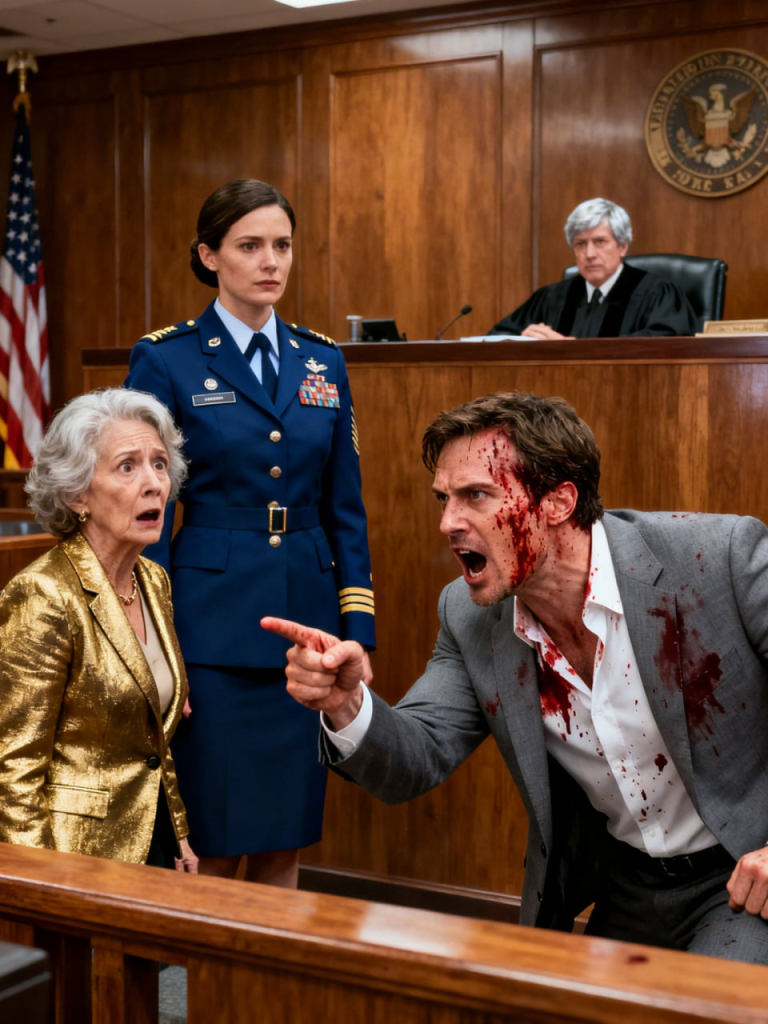
The courtroom was packed—not with reporters, but with family friends who treated probate court like entertainment. My mother’s church friends sat behind her, whispering. Rafe’s business buddies sat like jurors. Nico’s girlfriend sat with her arms crossed, chewing gum like this was a movie.
I sat with Judith, hands folded tightly in my lap. Priya—my best friend—sat behind me, her presence like a spine.
Judge Reyes entered, and the room stood.
“Be seated,” he said, voice calm but absolute.
Stokes stood immediately. “Your Honor, we object to the admission of this so-called footage. It’s a private home, and Ms. Alvarez obtained it without proper consent. It’s prejudicial.”
Judith stood. “Your Honor, the decedent installed the camera in his own home. The footage is relevant to establishing undue influence and potential forgery. We can authenticate through the security provider and metadata.”
Judge Reyes listened, fingers steepled.
Then he asked, “Ms. Kaplan, is there audio?”
“Yes, Your Honor.”
A ripple moved through the room.
My mother’s face tightened.
Rafe’s jaw flexed.
Nico smirked—still smirking, like he couldn’t imagine consequences touching him.
Judge Reyes nodded once. “Play it.”
My heart hammered so loud I thought the judge could hear it.
The screen at the front of the courtroom flickered to life.
Pops’ kitchen appeared—warm wood cabinets, my grandfather’s chipped blue mug on the counter, the table where he taught me how to roll tortillas when I was nine.
Then my family walked in.
Their faces on the screen looked different from how they looked in court. In court, they were polished. Controlled. Victims.
On the screen, they were what they were when they thought no one was watching.
Predators.
My mother’s voice filled the courtroom: “Just sign. Then you can rest.”
Rafe: “Don’t make this hard.”
The notary: “He’s out of it.”
Maribel laughing.
Then Nico’s line—“If he doesn’t sign, can we just… do it for him?”—echoed through the courtroom, and the sound was like someone tearing fabric.
Gasps. Whispers. Someone in the back muttered, “Oh my God.”
My mother’s church friend covered her mouth.
Rafe’s attorney’s face went pale.
And my mother—my mother sat rigid as stone, eyes fixed forward, refusing to react like reacting would make it real.
Then the footage continued.
The backdating discussion.
The money threat.
The moment Pops whispered, “You’re rats.”
I saw Judge Reyes’ gaze sharpen.
Not at my family.
At something else.
He leaned forward slightly, eyes narrowing at the screen.
The video showed Pops’ fridge in the background, cluttered with magnets and papers.
A bright white sheet of paper was pinned there, slightly crooked.
It had a seal.
A court seal.
Judge Reyes’ eyes didn’t blink.
He lifted a hand. “Pause,” he said.
The courtroom froze.
Judith looked surprised. Stokes looked panicked.
Judge Reyes stood from the bench and walked closer to the screen, ignoring the murmurs. He pointed at the paper pinned to Pops’ fridge.
“Zoom in,” he ordered.
The clerk fumbled with controls until the image enlarged.
There, clear enough now, was the heading:
TEMPORARY PROTECTIVE ORDER — NO CONTACT
And beneath it, a signature.
Judge Reyes’ signature.
My breath caught.
Because suddenly, I remembered something I hadn’t connected: three weeks before Pops died, I’d filed an elder abuse complaint after Rafe showed up drunk and screamed at Pops for “being stubborn.” The police had come. A social worker had come. There had been a hearing.
Judge Reyes had presided.
He’d granted a temporary no-contact order against Rafe until the investigation concluded.
My family had pretended it never happened.
But Pops had pinned the order to his fridge like a shield.
Judge Reyes stared at the order on the screen for a long moment.
Then he turned slowly back toward the courtroom.
His voice was calm, but it carried danger. “Mr. Stokes,” he said, “what is the date of the will your clients are presenting?”
Stokes swallowed. “May… May 3rd, Your Honor.”
Judge Reyes nodded once. “And what is the date on that protective order pinned in the background?”
The clerk zoomed further.
May 19th.
Judge Reyes’ jaw tightened.
He looked directly at Rafe. “Mr. Alvarez,” he said, “you were under a no-contact order as of May 19th, issued by this court.”
Rafe’s face flushed. “Your Honor—”
Judge Reyes raised a hand. “The will you claim was signed on May 3rd is allegedly executed in the decedent’s kitchen.”
He tapped the screen. “This footage shows the signing occurring at a time when my protective order—dated May 19th—was already posted in that kitchen.”
The room went so quiet I could hear someone’s nervous breathing.
Judge Reyes’ voice sharpened. “Which means one of two things is true: either this footage is not from May 3rd… or the order is fake.”
He paused, eyes cold. “And I assure you, my signature is not fake.”
Stokes’ mouth opened, closed.
Rafe stammered, “That order was posted later—”
Judge Reyes cut him off. “The footage contains audio of your family instructing the notary to backdate. It also contains your direct involvement while under the shadow of an order you were legally obligated to obey.”
He turned to the clerk. “Resume.”
The footage continued—the part where Rafe said, “After this, we go through the safe,” and my mother laughed about Pops not needing documents “where he’s going.”
A woman in the back started crying—not my mother. One of her friends.
Judge Reyes turned back to counsel. “Ms. Kaplan,” he said, voice controlled, “submit the full file, metadata, and authentication records. This court will admit this evidence.”
Stokes found his voice. “Your Honor, this is prejudicial—”
Judge Reyes snapped, “It is probative.”
Then he looked straight at my mother—Lidia—like he could see the bones under her performance.
“Ms. Alvarez,” he said, “do you understand that attempted fraud upon this court has criminal implications?”
My mother’s lips trembled. “We were… trying to protect the estate.”
Judge Reyes’ tone was flat. “From whom? The decedent’s chosen heir?”
Rafe stood abruptly, face purple. “This is a witch hunt!”
Judge Reyes didn’t even raise his voice. “Sit. Down.”
Rafe sat.
Nico, for the first time, didn’t smirk. He stared at the floor like it might open.
Judge Reyes addressed the room. “This court will refer this matter to the district attorney for review of potential forgery, elder abuse, and conspiracy to commit fraud.”
A wave of shock rippled through the courtroom.
My aunt Maribel’s face crumpled. “No,” she whispered.
My mother’s head snapped toward me, eyes blazing with hatred so pure it felt almost clean.
“You,” she mouthed silently.
I didn’t look away.
Because the moment Judge Reyes recognized his own protective order on Pops’ fridge, my family’s story died.
Not Pops.
Their story.
Outside the courthouse, chaos erupted.
My mother’s friends scattered like they didn’t want to be seen next to her. Rafe’s buddies avoided eye contact. Nico’s girlfriend hissed, “What did you do?” and stormed off.
My mother grabbed my arm—hard. “You set us up,” she hissed, nails digging into my skin.
I yanked away. “You set yourselves up,” I said, voice shaking. “You talked. You threatened. You backdated. You put your own crimes on camera.”
Rafe stepped close, face inches from mine, breath hot with rage. “You think you won?” he snarled. “You think the judge’s little moment changes who you are? You’re still nobody without us.”
Priya stepped between us, shoulder squared. “Touch her again,” she warned, “and I’ll call the police myself.”
Rafe sneered. “Who are you?”
“The person who shows up,” Priya said. “Unlike you.”
That made Rafe’s eyes flash with violence.
For a moment, I thought he might swing.
Instead, he spit on the sidewalk—disgusting, childish—and stormed away, shoving Nico’s shoulder as he passed like even his son was guilty by proximity.
My mother stood trembling, mascara streaking, her grief-mask completely shredded now.
“You just killed this family,” she whispered.
I stared at her. “No,” I said. “You killed it when you treated Pops like a vault.”
My mother’s voice cracked into a scream. “He was our father!”
“And you didn’t act like it,” I shot back. “You acted like he was a prize you deserved.”
Maribel sobbed loudly, wailing, “We didn’t mean it!” as if meaning mattered more than doing.
I walked away while they unraveled behind me, not because I was strong, but because if I stayed, I would have turned grief into violence.
And Pops’ note was still in my pocket like a compass.
Let them talk.
They always tell on themselves.
The criminal investigation took months. In that time, the probate case shifted from “he said, she said” to “here’s what happened.”
The notary—a woman named Celia Dunn—flipped quickly when confronted with the video and the backdating conversation. She tried to claim she’d been pressured. She tried to claim she didn’t know Pops was incompetent.
The DA didn’t care about her excuses as much as she cared about her cooperation. Celia gave them texts from Rafe. Payment receipts. Messages that made my stomach churn.
Rafe: “Do your job. Don’t be soft.”
Rafe: “He won’t remember.”
Rafe: “Backdate. We need it clean.”
Celia: “This is risky.”
Rafe: “So is being broke.”
My mother tried a new story: she claimed Pops had “always promised” the estate would be split evenly, and that I had “brainwashed” him in his final months.
Judith destroyed that story with Pops’ earlier estate planning documents, notes, and emails to Judith spanning years—years of Pops expressing disappointment, not in my family’s busy lives, but in their absence.
And then there was Pops’ own handwriting. He’d kept a journal. Not poetic, not dramatic. Just notes:
Lidia came. Asked about house. Didn’t ask about doctor.
Rafe called. Wanted rent money. Hung up when I said no.
Sofía made soup. Sat with me when I was scared.
Those lines hit harder than any legal argument.
Because they were simple.
And they were true.
When the final probate hearing arrived—the one that would determine the valid will—Judge Reyes took his seat and looked out at the courtroom like he’d seen every kind of family lie and was tired of all of them.
Rafe was there, but he looked different. Smaller. Less sure. The DA’s office sat at a table nearby, a quiet reminder that consequences weren’t theoretical anymore.
My mother wore a plain black dress, no lace. Her eyes were red-rimmed. She didn’t look like a victim now. She looked like someone cornered by reality.
Nico kept glancing at the doors like he wanted to run.
Judge Reyes reviewed the evidence, the authentication of the kitchen footage, the metadata timestamps, the notary’s admission, the contradiction of dates, the protective order pinned on the fridge.
Then he spoke.
“This court finds that the purported final will presented by the respondents is invalid,” he said, voice steady. “It was procured through undue influence, executed under conditions of incompetence, and backdated to conceal legal prohibitions and medical realities.”
My mother made a sound like an injured animal.
Judge Reyes continued. “The prior will, executed eighteen months before decedent’s passing, is upheld. The estate shall be administered accordingly.”
He looked at me. “Ms. Sofía Alvarez, as beneficiary and appointed executor, you will proceed under counsel.”
My hands trembled. My throat burned.
I wanted to celebrate. I wanted to cry. I wanted Pops back.
Instead I just nodded, because sometimes victory is so heavy you can’t lift it.
Judge Reyes looked at my family one last time.
“Family is not a license,” he said, voice firm. “It is not a legal entitlement. And it is not an excuse for predation.”
Then he struck his gavel.
And it was done.
Afterward, there were no movie-style come-to-Jesus apologies.
My mother didn’t suddenly soften. She didn’t run to me weeping, asking forgiveness. She stared at me with a hatred so old it felt inherited.
“You’ll be alone,” she said as we passed in the hallway.
I stopped. Looked at her. “I was alone when Pops was dying,” I said quietly. “I just didn’t realize it yet.”
Rafe avoided my eyes. Maribel whispered prayers under her breath like God was a witness for the defense.
Nico finally looked at me, face twisted with something close to fear. “This wasn’t supposed to happen,” he muttered.
I stared at him. “You mean consequences?” I said. “Yeah. They surprise people like you.”
He flinched as if I’d slapped him.
The criminal case ended in pleas. Rafe took a deal for attempted fraud and violation of the protective order; my mother took a deal for conspiracy and restitution; Maribel, who’d played follower and laughed at the wrong moments, pleaded to lesser charges and community service.
They didn’t go to prison for long—white-collar justice rarely looks like what it should—but they lost things they cared about: reputations, jobs, the ability to pretend they were “good people.”
And Pops’ name—my Pops, who loved beans and attention and clean counters—was no longer just a headline for their greed.
He was, finally, what he deserved to be:
A man whose wishes were honored.
A man whose kitchen told the truth.
When the estate was settled, I walked through Pops’ house alone one last time before I moved back in.
I stood in the kitchen where the camera still blinked quietly in the corner of the ceiling.
I opened the pantry and found the old beans Pops loved. I pulled out the pot he always used, the one with a dent in the side.
My hands shook as I filled it with water and set it on the stove.
I turned on the radio.
An old soul song drifted through the room, and I laughed—real laughter, for the first time in months—because it felt like Pops was standing beside me, tapping his fingers, pretending he wasn’t trembling.
I took a deep breath and said out loud, “You were right.”
Because he had been.
About everything.
About attention.
About ignoring things until they take from you.
About letting people talk.
They always tell on themselves.
The beans simmered. The kitchen warmed. Outside, the wind chimes on the porch tinkled softly.
And for the first time since Pops died, the house didn’t feel like a battleground.
It felt like home.

Leave a Reply