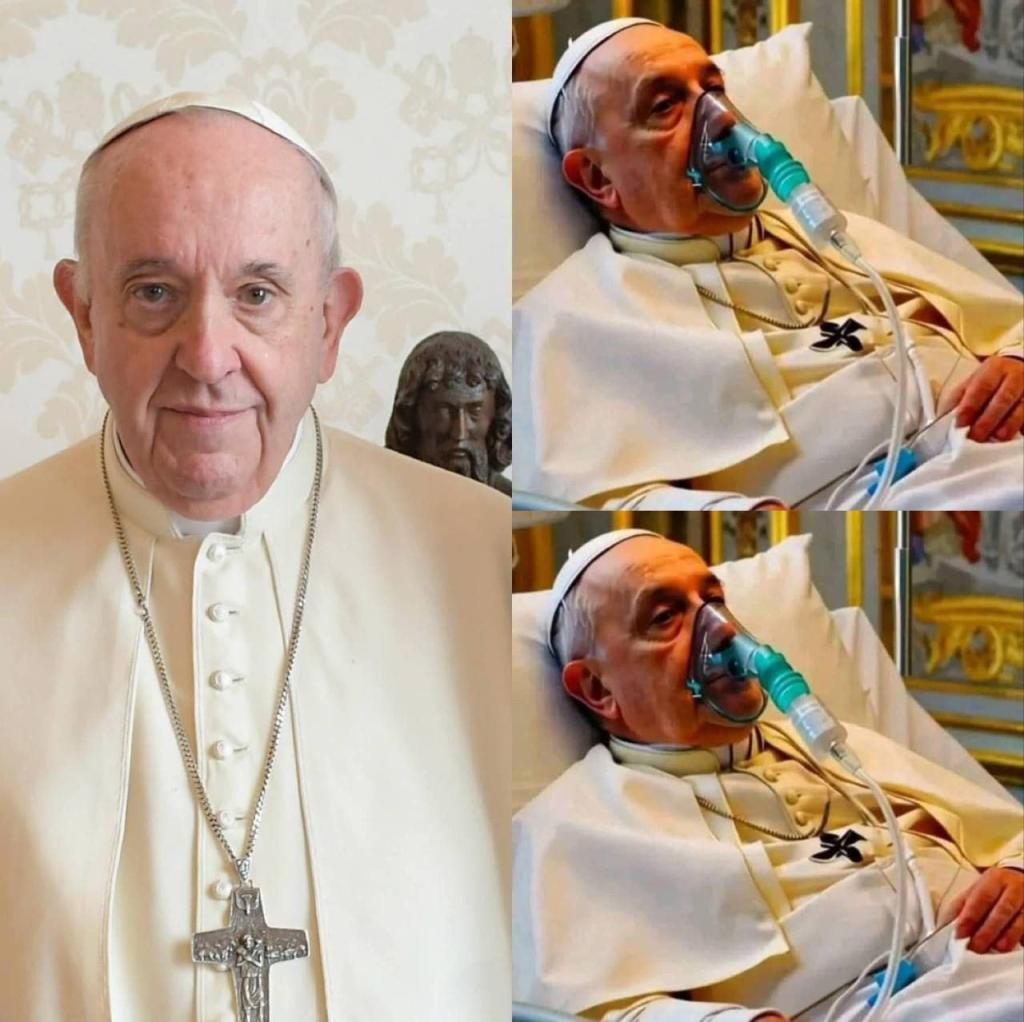
391 Breaking News! His Holiness Pope Francis has failed… See more
We implore you on behalf of Christ, be reconciled to God” (2 Cor 5:20)
Dear Brothers and Sisters,
This year the Lord grants us, once again, a favourable time to prepare to celebrate with renewed hearts the great mystery of the death and resurrection of Jesus, the cornerstone of our personal and communal Christian life. We must continually return to this mystery in mind and heart, for it will continue to grow within us in the measure that we are open to its spiritual power and respond with freedom and generosity.
1. The paschal mystery as the basis of conversion
Christian joy flows from listening to, and accepting, the Good News of the death and resurrection of Jesus. This kerygma sums up the mystery of a love “so real, so true, so concrete, that it invites us to a relationship of openness and fruitful dialogue” (Christus Vivit, 117). Whoever believes this message rejects the lie that our life is ours to do with as we will. Rather, life is born of the love of God our Father, from his desire to grant us life in abundance (cf. Jn 10:10). If we listen instead to the tempting voice of the “father of lies” (Jn 8:44), we risk sinking into the abyss of absurdity, and experiencing hell here on earth, as all too many tragic events in the personal and collective human experience sadly bear witness.
In this Lent of 2020, I would like to share with every Christian what I wrote to young people in the Apostolic Exhortation Christus Vivit: “Keep your eyes fixed on the outstretched arms of Christ crucified, let yourself be saved over and over again. And when you go to confess your sins, believe firmly in his mercy which frees you of your guilt. Contemplate his blood poured out with such great love, and let yourself be cleansed by it. In this way, you can be reborn ever anew” (No. 123). Jesus’ Pasch is not a past event; rather, through the power of the Holy Spirit it is ever present, enabling us to see and touch with faith the flesh of Christ in those who suffer.
2. The urgency of conversion
It is good to contemplate more deeply the paschal mystery through which God’s mercy has been bestowed upon us. Indeed, the experience of mercy is only possible in a “face to face” relationship with the crucified and risen Lord “who loved me and gave himself for me” (Gal 2:20), in a heartfelt dialogue between friends. That is why prayer is so important in Lent. Even more than a duty, prayer is an expression of our need to respond to God’s love which always precedes and sustains us. Christians pray in the knowledge that, although unworthy, we are still loved. Prayer can take any number of different forms, but what truly matters in God’s eyes is that it penetrates deep within us and chips away at our hardness of heart, in order to convert us ever more fully to God and to his will.
In this favourable season, then, may we allow ourselves to be led like Israel into the desert (cf. Hos 2:14), so that we can at last hear our Spouse’s voice and allow it to resound ever more deeply within us. The more fully we are engaged with his word, the more we will experience the mercy he freely gives us. May we not let this time of grace pass in vain, in the foolish illusion that we can control the times and means of our conversion to him.
3. God’s passionate will to dialogue with his children
The fact that the Lord once again offers us a favourable time for our conversion should never be taken for granted. This new opportunity ought to awaken in us a sense of gratitude and stir us from our sloth. Despite the sometimes tragic presence of evil in our lives, and in the life of the Church and the world, this opportunity to change our course expresses God’s unwavering will not to interrupt his dialogue of salvation with us. In the crucified Jesus, who knew no sin, yet for our sake was made to be sin (cf. 2 Cor 5:21), this saving will led the Father to burden his Son with the weight of our sins, thus, in the expression of Pope Benedict XVI, “turning of God against himself” (Deus Caritas Est, 12). For God also loves his enemies (cf. Mt 5:43-48).
The dialogue that God wishes to establish with each of us through the paschal mystery of his Son has nothing to do with empty chatter, like that attributed to the ancient inhabitants of Athens, who “spent their time in nothing except telling or hearing something new” (Acts 17:21). Such chatter, determined by an empty and superficial curiosity, characterizes worldliness in every age; in our own day, it can also result in improper use of the media.
4. A richness to be shared, not kept for oneself
Putting the paschal mystery at the centre of our lives means feeling compassion towards the wounds of the crucified Christ present in the many innocent victims of wars, in attacks on life, from that of the unborn to that of the elderly, and various forms of violence. They are likewise present in environmental disasters, the unequal distribution of the earth’s goods, human trafficking in all its forms, and the unbridled thirst for profit, which is a form of idolatry.
Today too, there is a need to appeal to men and women of good will to share, by almsgiving, their goods with those most in need, as a means of personally participating in the building of a better world. Charitable giving makes us more human, whereas hoarding risks making us less human, imprisoned by our own selfishness. We can and must go even further, and consider the structural aspects of our economic life. For this reason, in the midst of Lent this year, from 26 to 28 March, I have convened a meeting in Assisi with young economists, entrepreneurs and change-makers, with the aim of shaping a more just and inclusive economy. As the Church’s magisterium has often repeated, political life represents an eminent form of charity (cf. Pius XI, Address to the Italian Federation of Catholic University Students, 18 December 1927). The same holds true for economic life, which can be approached in the same evangelical spirit, the spirit of the Beatitudes.
I ask Mary Most Holy to pray that our Lenten celebration will open our hearts to hear God’s call to be reconciled to himself, to fix our gaze on the paschal mystery, and to be converted to an open and sincere dialogue with him. In this way, we will become what Christ asks his disciples to be: the salt of the earth and the light of the world


Leave a Reply